Rugged Case or Purpose-Built Rugged Tablet?
Whether to go with a rugged case on a conventional tablet or invest in a purpose-built rugged tablet really depends on how and where you’ll be using it.
What you get with a rugged tablet (purpose-built)
Examples:
Dell Pro Rugged 10
Advantages:
Built from the ground up for harsh environments: sealed ports, reinforced chassis, vibration/shock resistance, high ingress-protection (IP) ratings, maybe certified to military standards (e.g., MIL-STD-810) etc.
The display, internals, touch system etc are also designed for tough conditions: glove usage, outdoor brightness, temperature extremes.
Lower risk of failure in extreme conditions (drops, dust, water, vibration) and thus potentially lower downtime/maintenance cost.
The entire device is harmonised for the environment (frame + internals + software + service).
Disadvantages:
Higher upfront cost. Rugged tablets tend to be significantly more expensive than “regular” tablets + case.
Heavier / bulkier than typical consumer tablets (the rugged chassis adds mass).
Possibly fewer device selection options (less variety than consumer tablets) or compromises in “stylishness”.
If you’re not really using the full rugged environment, you may be “over-paying” for durability you don’t need.

Make it stand out
Glove touch, rain mode, and integrated function buttons are some of advantages of a purpose-built rugged tablet.
🔧 What you get with a rugged case on a regular tablet
Examples:
Advantages:
Lower cost to protect your existing tablet or a more consumer-grade tablet.
Allows you to keep a more “regular” tablet (lightweight, higher specs) and add some protection.
More flexibility: you can use a premium tablet and just “toughen it up”.
Rugged cases may be more easily customised with your company colours/logos. MOQs apply.
Rugged cases can now be modified with integrated technologies like barcode readers that are powered by the device.
Rugged cases often have better product availability than purpose-built devices which due to the number of options available, have to be built to order.
Disadvantages:
The case can only protect the external shell — internal components (motherboard, connector joints, etc) weren’t built for extreme abuse.
The base tablet might not have the features you need: sunlight readable screen, glove touch, sealed ports, long field battery life, extreme temperature tolerance.
Some protection gaps: even with a case, the tablet might fail under conditions for which a true rugged tablet is designed (drop onto concrete, vibration, dust ingress, immersion).
Potential hidden costs: if the regular tablet fails, you may have to replace it sooner. Some sources argue total cost of ownership might end up higher if used in harsh environments.
🤔 So which is better?
It depends on the use case. Here are some guiding questions:
How harsh is the environment? If you’re in construction, outdoors, in dust/mud/wet, high vibration or extreme temps → rugged tablet is likely the safer bet. For lighter use (e.g., field checking, retail, occasional outdoors) maybe a regular tablet + rugged case will suffice.
What are the performance & feature needs? Do you need glove touch, outdoor readable screen, sealed connectors, long shift battery, etc? If yes → rugged tablet likely better.
Budget & device lifecycle: Can you afford the higher upfront cost of a rugged tablet? Will you realistically exploit its durability (i.e., avoid replacements, downtime)? If yes, the rugged device may offer better long-term value. If not, a rugged case might be enough.
Weight/portability trade-offs: Rugged tablets tend to be heavier/bulkier — if your priority is ultra-light portability then a case + lighter tablet might win in that dimension.
Future support & replacements: Rugged devices often are maintained longer, have better service for industrial use. Regular tablets may become obsolete sooner or not have extended support for rugged environments.
🧾 My verdict
If I had to pick a default recommendation, generally speaking:
For serious field/industrial/harsh use: go for a purpose-built rugged tablet. The extra cost is justified by reliability and reduced downtime.
For moderate use (lighter fieldwork, less extreme conditions, budget conscious): a good tablet with a high-quality rugged case is a realistic and more cost-effective compromise.
Contact SLATE PC for an individual consultation about your use case requirements today
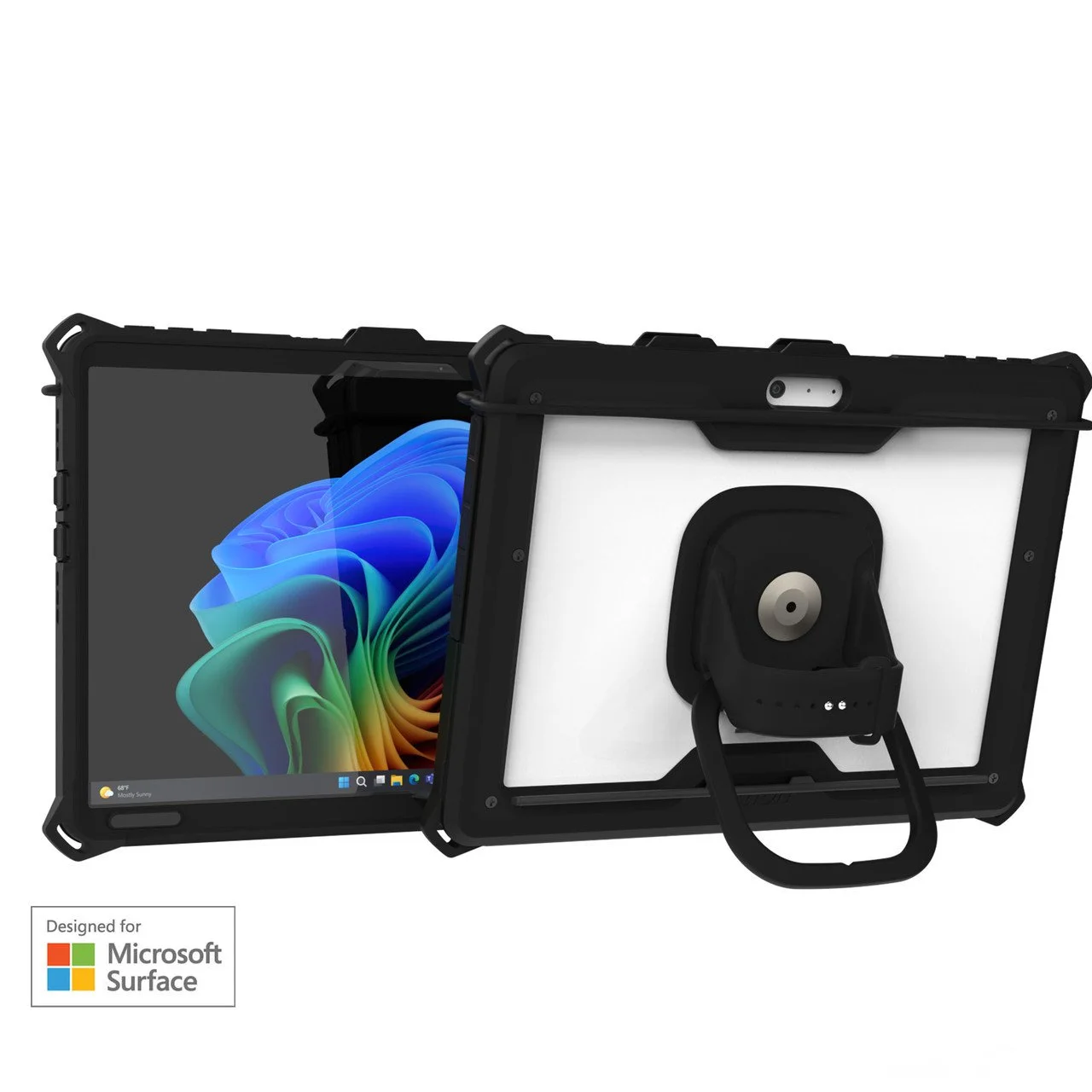
Choose a rugged case that has been certified for use by the device manufacturer.